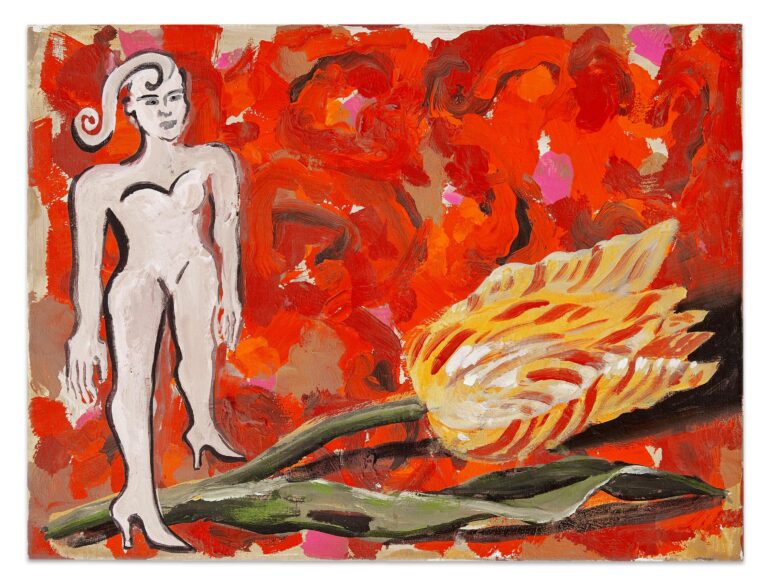
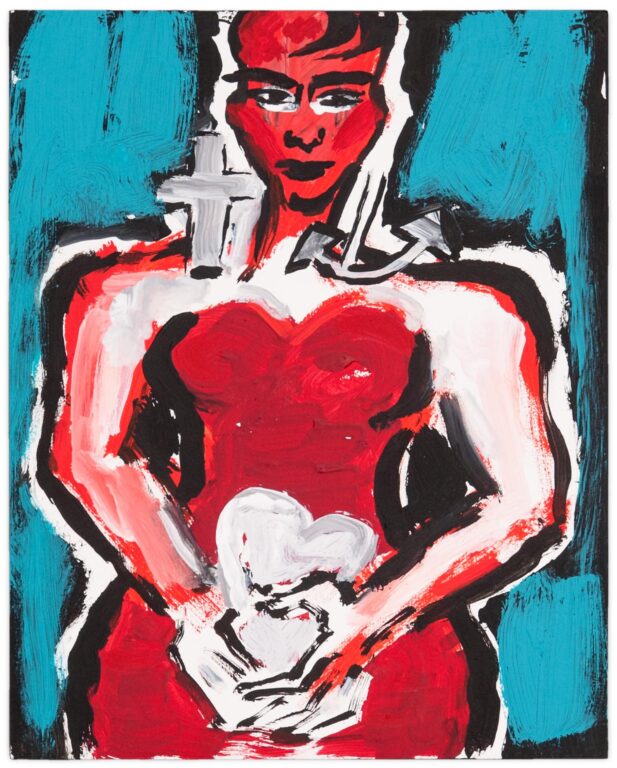
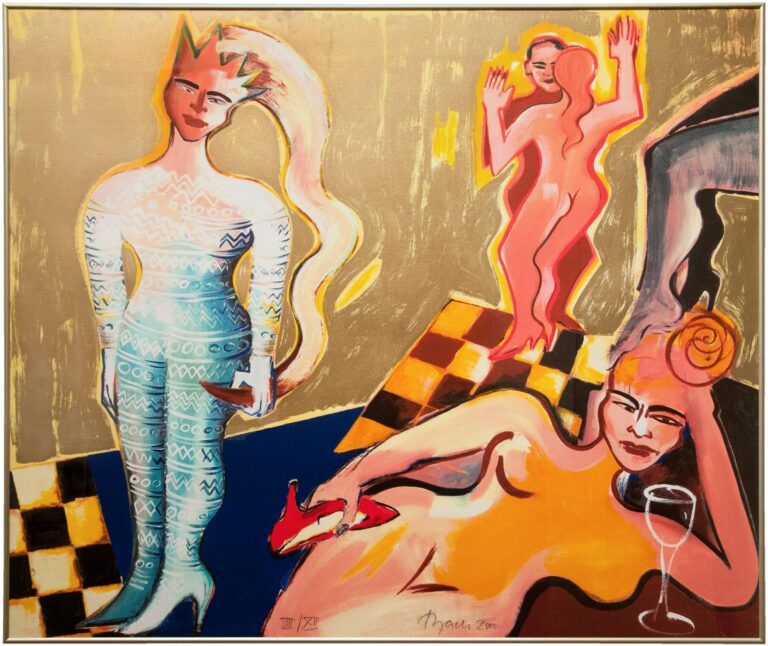
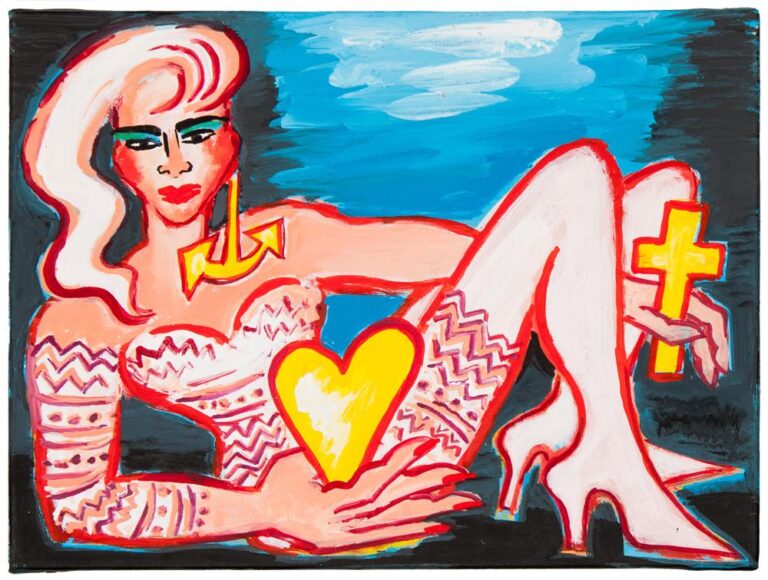
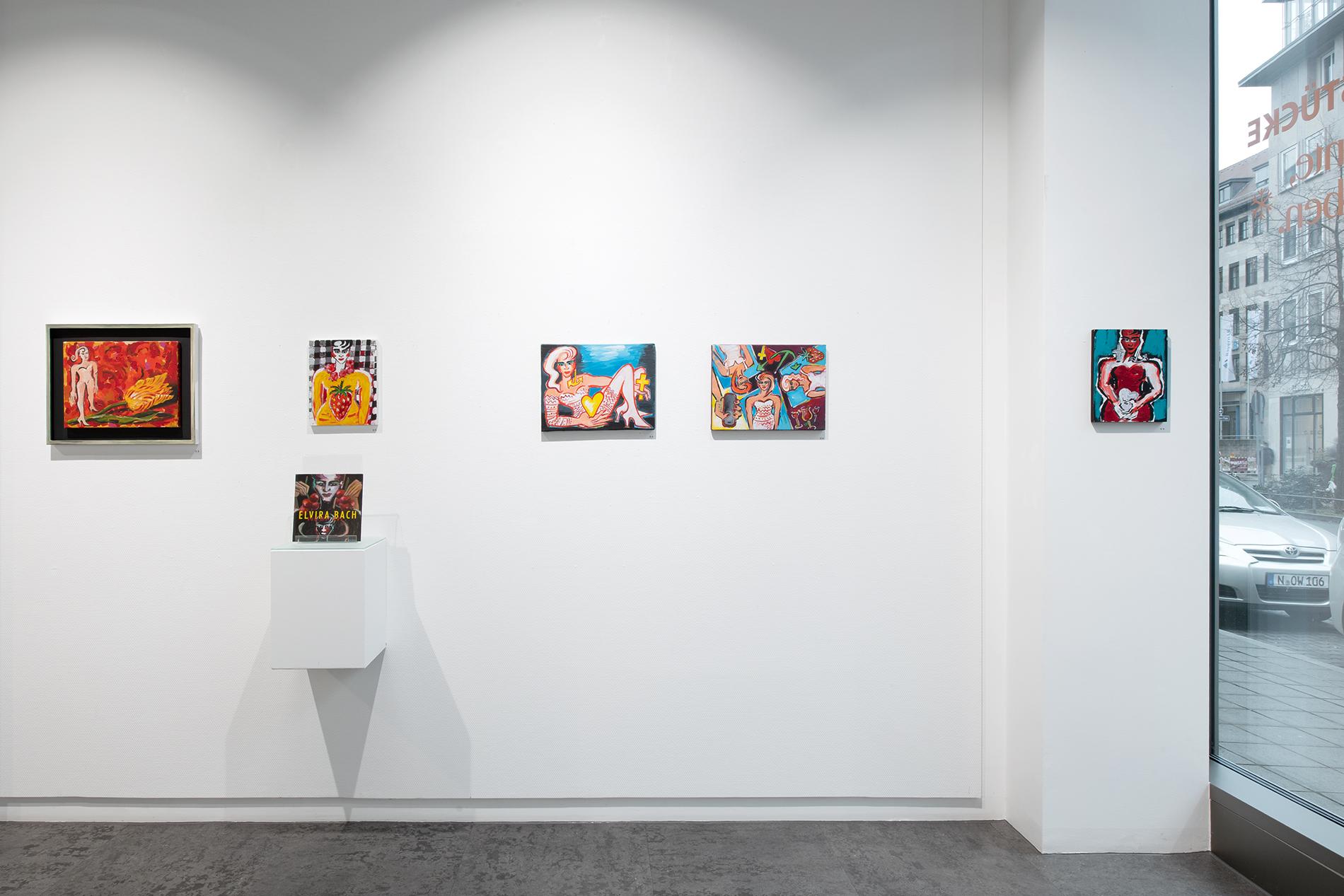
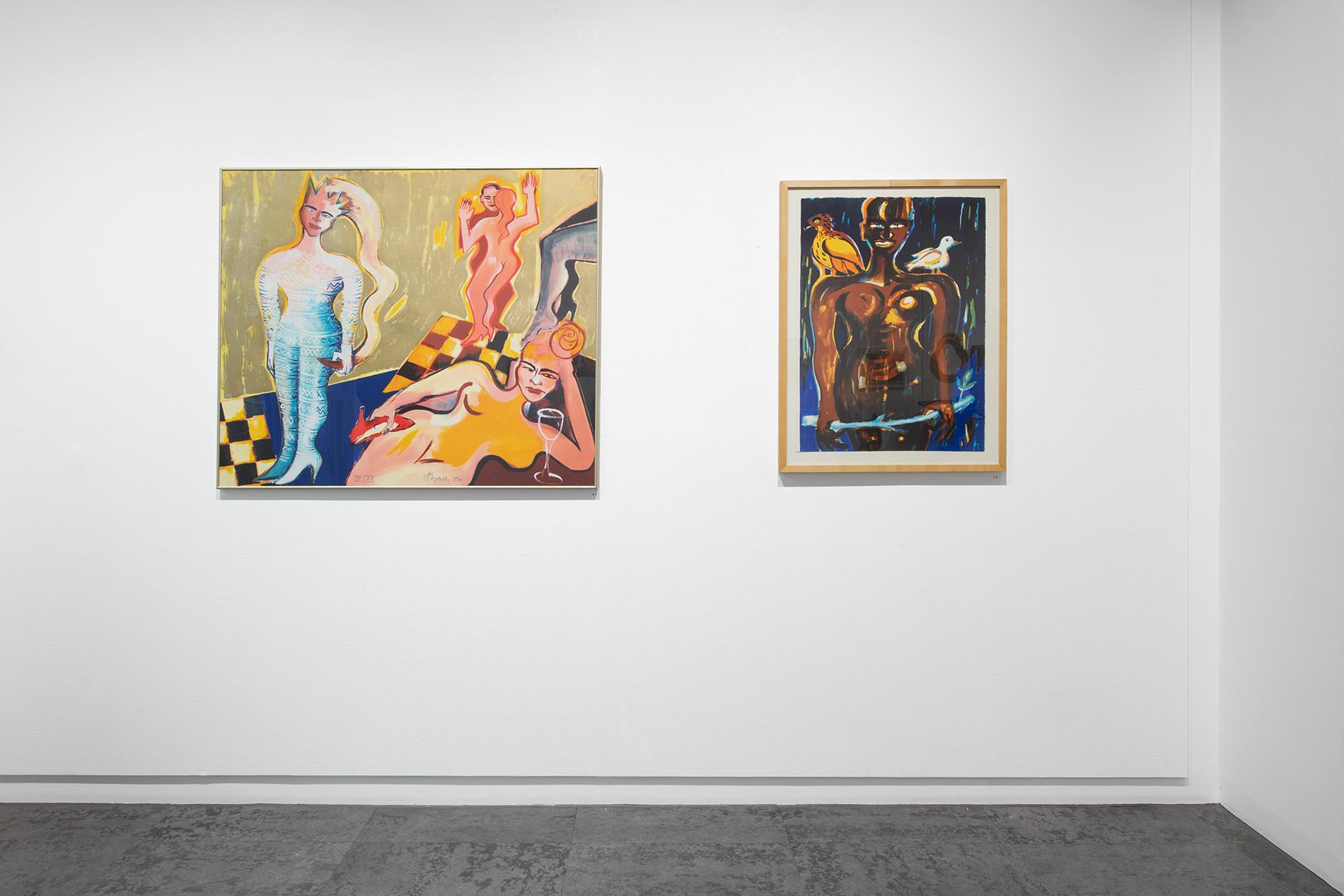
Elvira Bach is one of the most influential artists in contemporary German art. Since the early 1980s, she has been developing a distinctive and consistent body of work that focuses on the female body, not as an object, but as a self-determined subject.
Bach became known in the context of the so-called “Junge Wilde” (Young Wild Ones), a generation of artists who turned against the cool austerity of Minimal Art and Conceptual Art and established a new visual language with expressive figuration, powerful colors, and emotional directness. Within this environment, however, Elvira Bach occupied a special position from the very beginning. She brought a decidedly female perspective to a movement that, despite its unconventional nature, was initially strongly male-dominated.
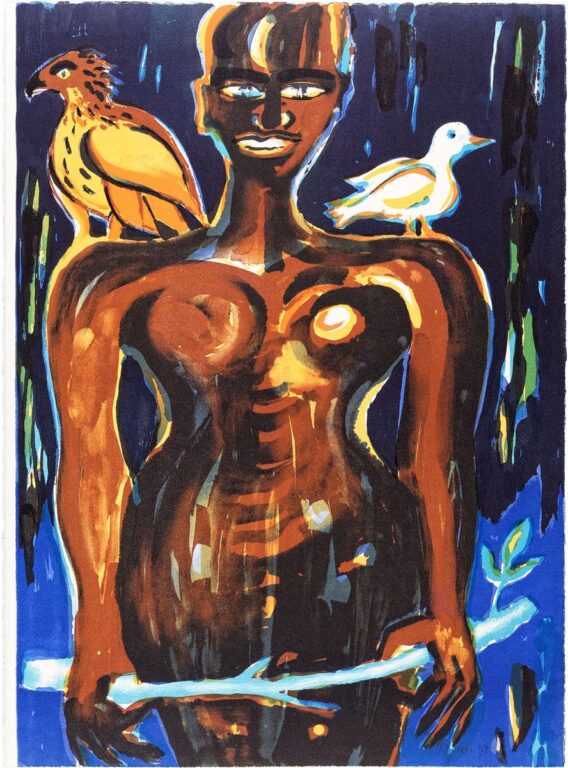
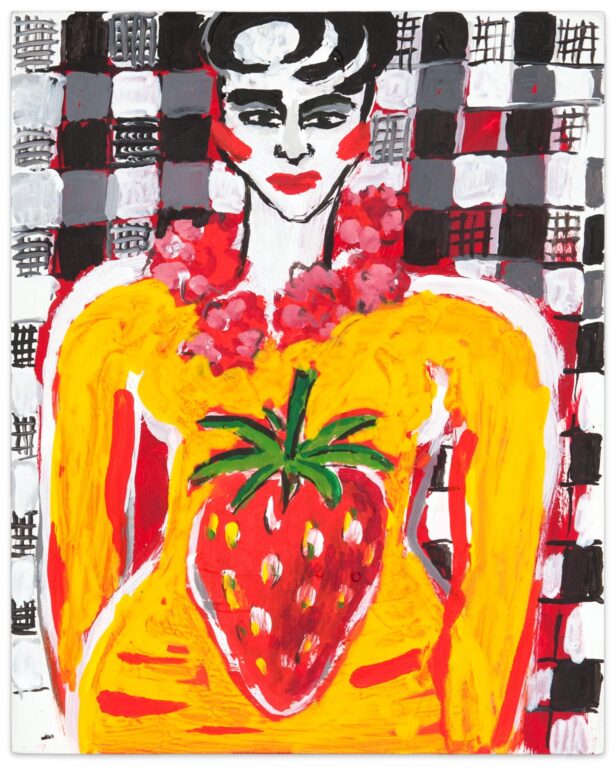
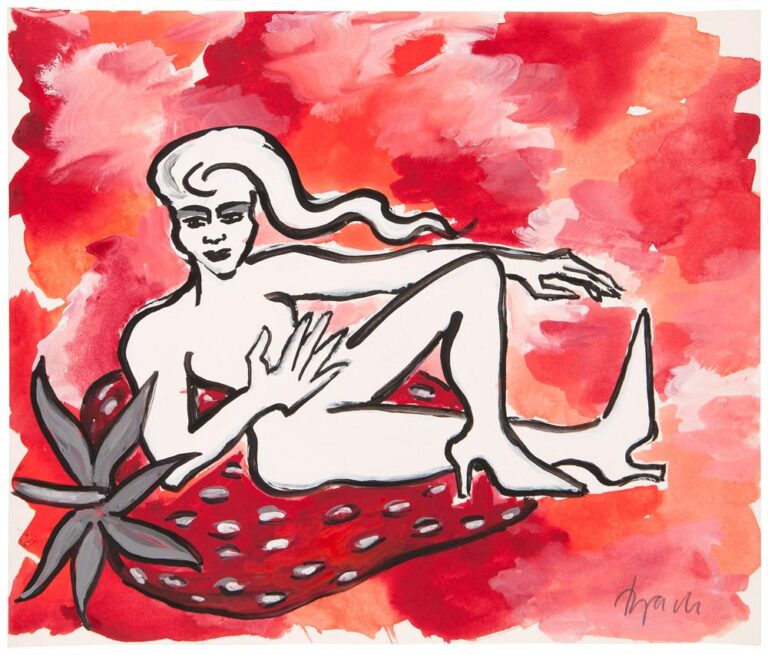
Bach’s figures, often recognizable as self-portraits, confront the viewer head-on, self-confident and with a strong physical presence. Her women are monumental and vulnerable at the same time, endowed with attributes, gestures, or gazes that reveal individual identity and inner attitude. The nude does not serve as an idealized representation, but becomes a vehicle for experience, self-assertion, and emancipation.
In her works, Elvira Bach negotiates questions of role models, physicality, and female autonomy. The body appears as a place of strength, resistance, and self-empowerment, far removed from traditional, passive nude representations, thus unfolding a timeless relevance.