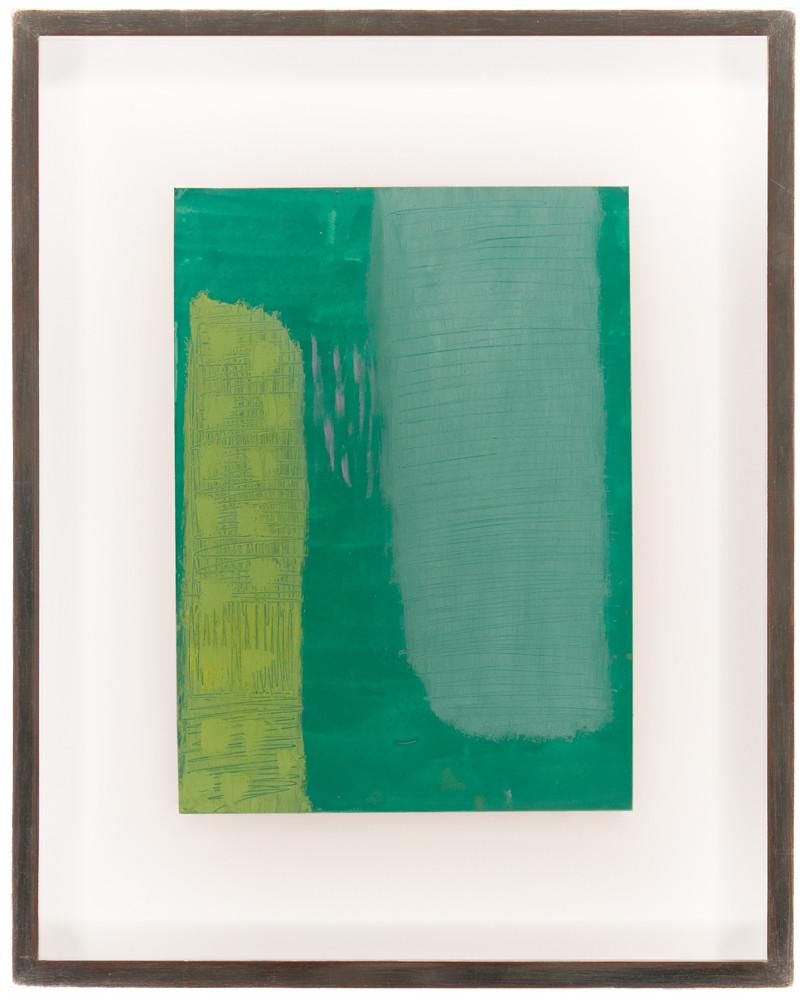
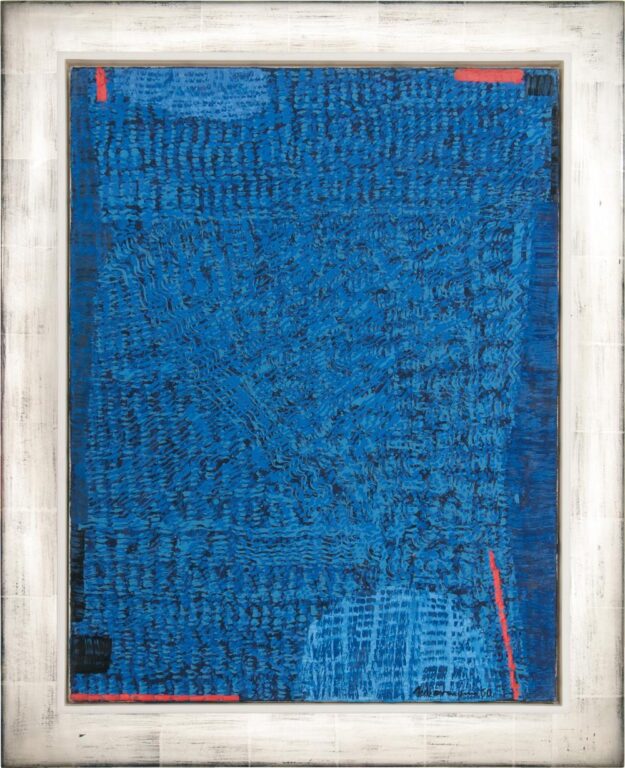
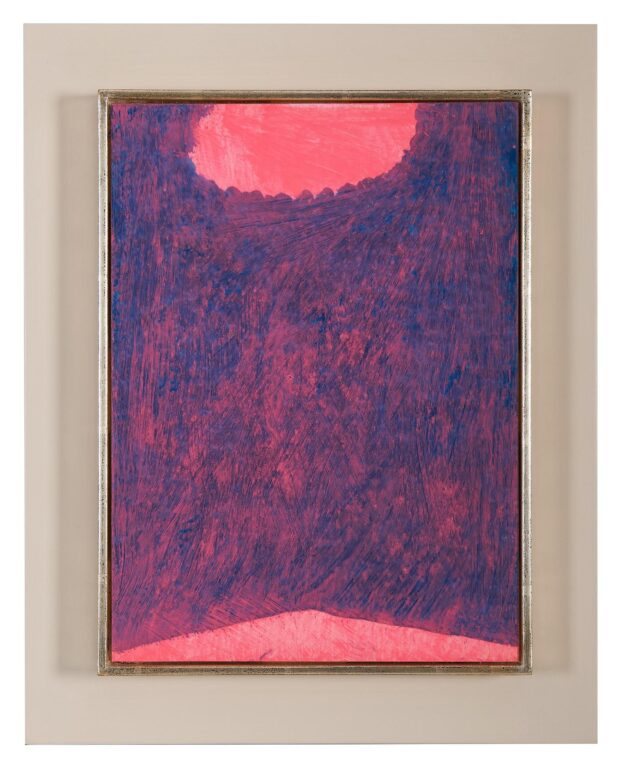
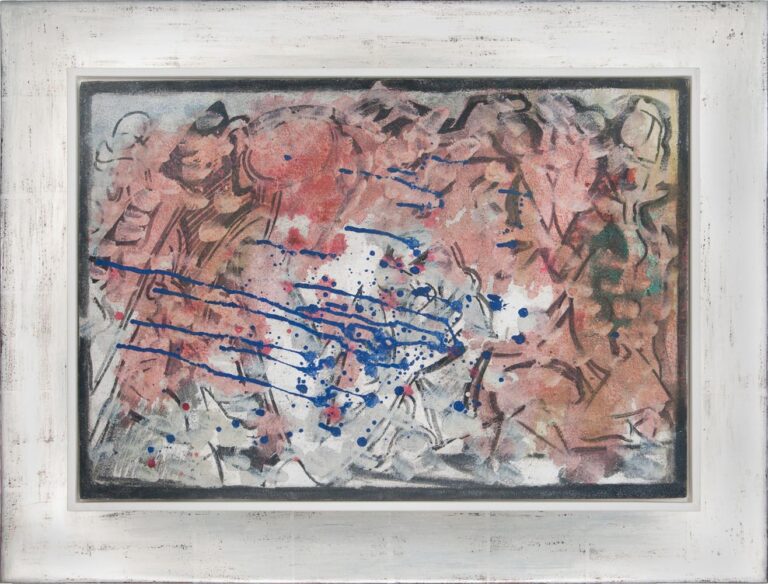
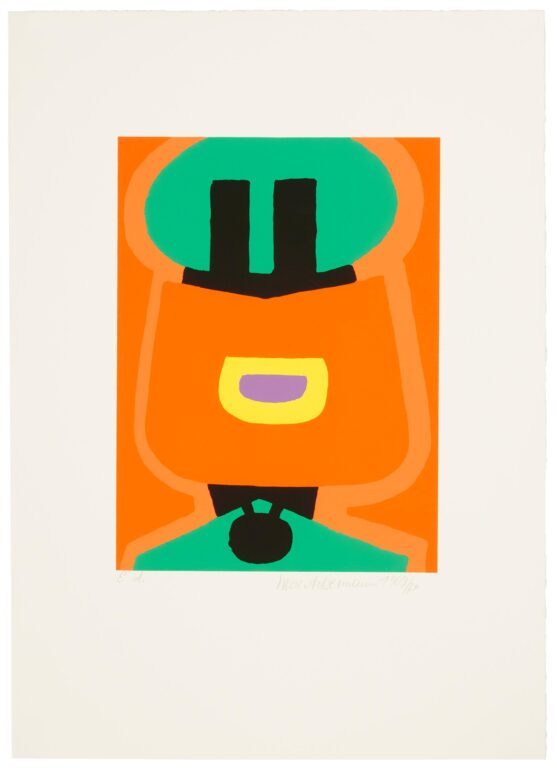
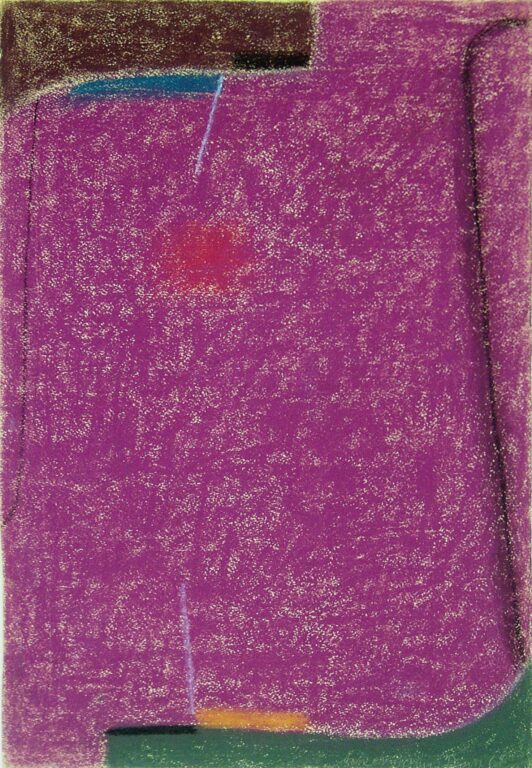
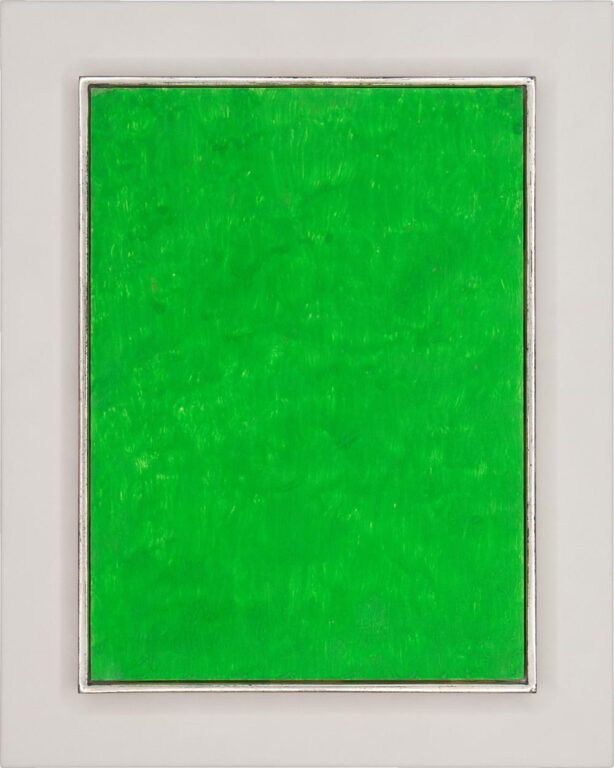
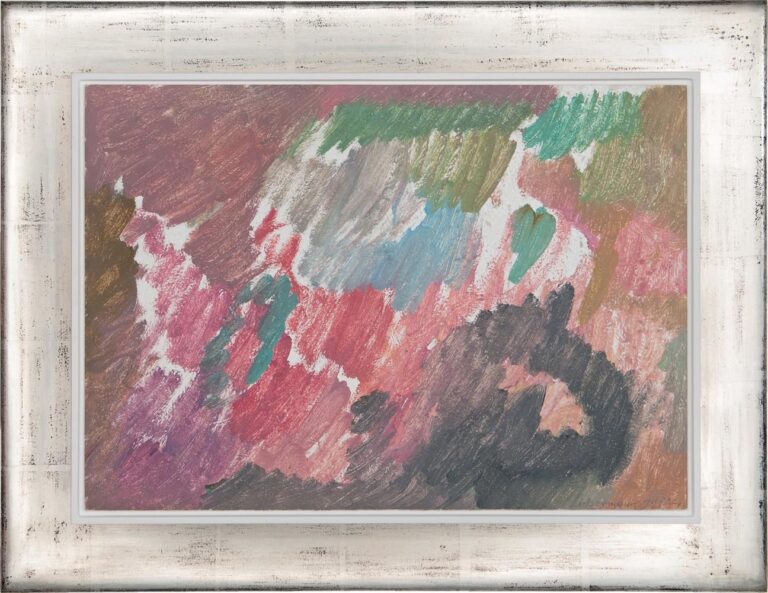
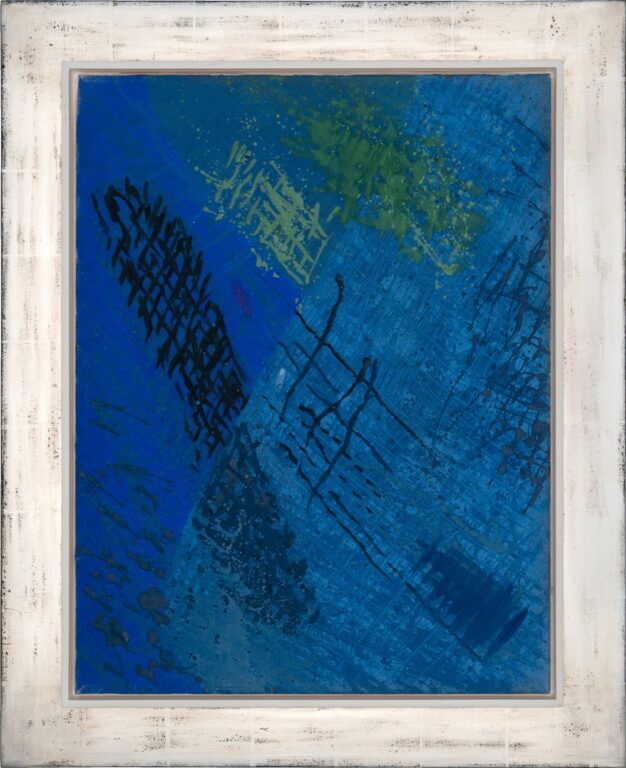
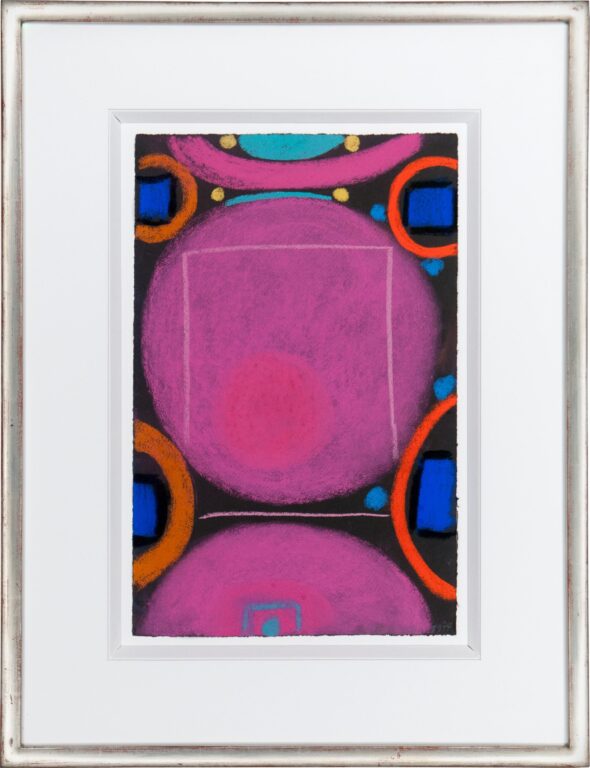
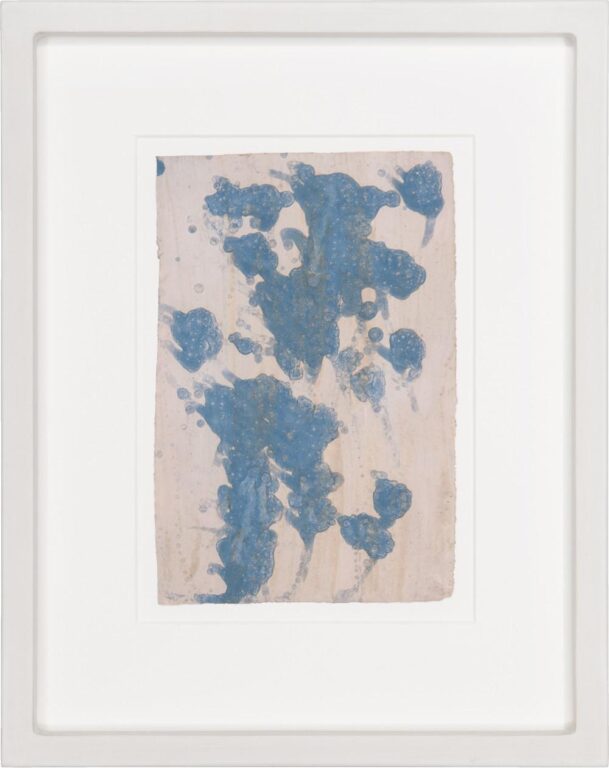
Überbrückungskomposition Strukturbild - Max Ackermann
Exhibitions:

2008 Max Ackermann – Sehnsucht nach Vollendung, Neues Kloster Bad Schussenried

Verso, inscribed by the artist in blue ballpoint pen at the upper center, “M.A.”, with the date 1969 written beside it.


Max Ackermann is regarded as one of the pioneers of German Modernism and a forerunner of geometric abstraction. Ackermann’s artistic oeuvre, spanning from the beginning of the 20th century until his death in 1975, is characterized by remarkable diversity. Over this considerable period, Ackermann developed a multifaceted yet distinctive artistic language that reflected an era of profound change.

“Max Ackermann created an artistic oeuvre of considerable significance. He was an avant-garde artist, a critical realist, and a practitioner of both constructive and lyrical abstraction. His creative drive, critical engagement, versatility and contradictions contributed to the fact that, although initially celebrated as an abstract artist after 1945, his importance remained insufficiently recognized for many years.

Ackermann’s work was as influential in shaping Modernism as that of his contemporaries Willi Baumeister (1889–1955), Fritz Winter (1905–1976) and Georg Meistermann (1911–1990). Like Baumeister, Ackermann was a prominent innovator of modern art, both during the 1920s and in the postwar period.

Both artists belonged to the Stuttgart circle surrounding Adolf Hölzel (1853–1934), who is considered one of the founders of abstract art. During the Second World War, they lived on the Höri Peninsula on Lake Constance, alongside other persecuted and ostracized artists.

Ackermann was, and continues to be, regarded primarily as one of the great abstract artists of the postwar period, a master of pastel and a painter of the color blue.
”

Excerpt from “Max Ackermann and the Abstract-Absolute: On the Role of Improvisation and Experiment in His Work” by Dr. Nicola Heuwinkel, published by Bode Galerie.

Enquiry