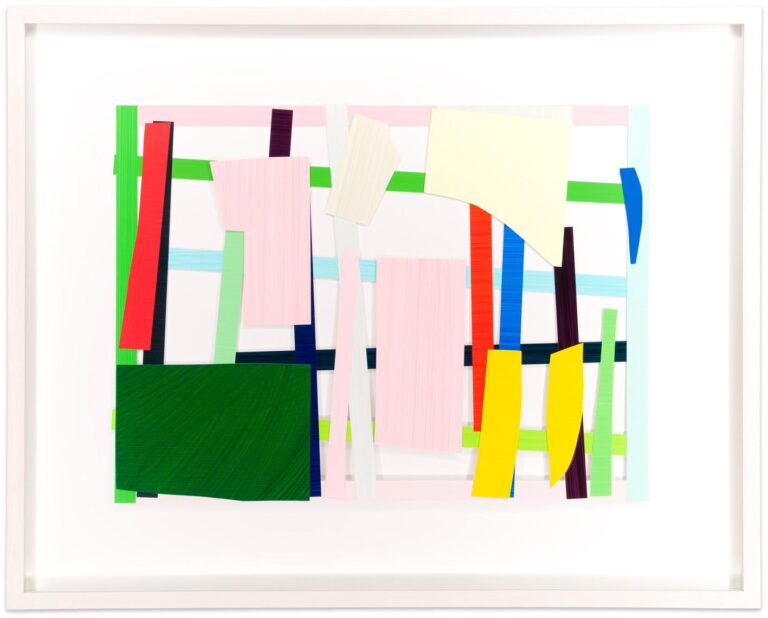
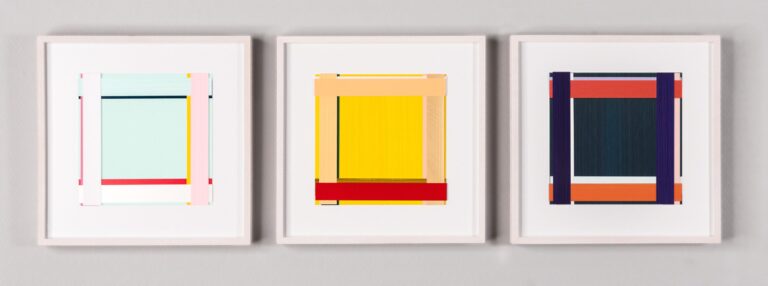
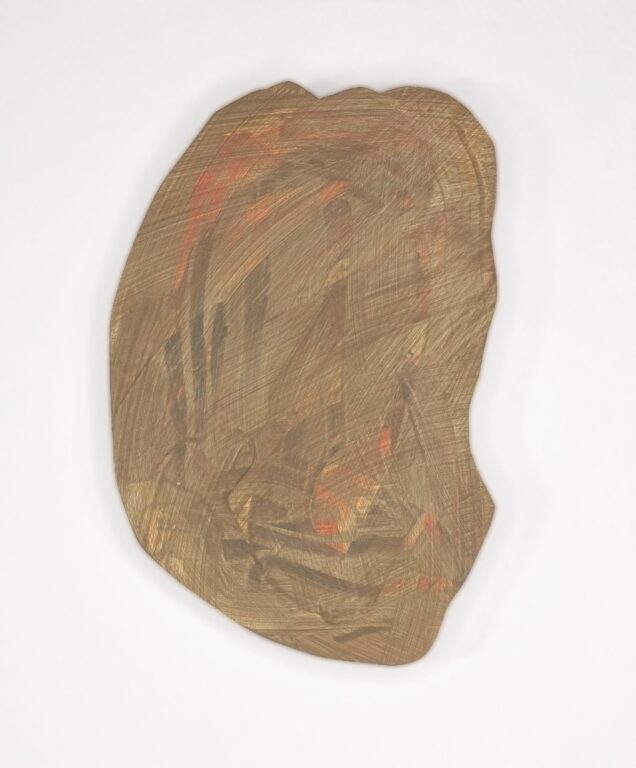
Imi Knoebel (geb. Klaus Wolf Knoebel) beschäftigt sich in seinem Werk mit analytischen Werkreihen, in denen der Künstler die Beziehungen zwischen Raum, Medium und Farbe erforscht. Sein minimalistischer Umgang mit den Kernelementen der modernen Malerei geht auf sein Vorbild Kasimir Malewitsch zurück. Die Installation “Raum 19” von 1968 gilt bis heute als eines der wegweisenden Werke des Minimalismus. Vorbild war der von Joseph Beuys beauftragte Raum 19 in der Düsseldorfer Kunstakademie, der als identitätsstiftender Raum für Knoebels späteres Werk gilt. Die ersten Farbbilder entstehen 1974, zuvor arbeitet der Künstler ausnahmslos puristisch mit Lichtprojektionen und monochromer Malerei. Nach den polygonalen Tafelbildern (Mennigebilder) von 1975 wendet er sich ab der zweiten Hälfte der 1970er Jahre spielerischen, freien und polychromen Formen zu.
Das politische Engagement des Künstlers zeigt sich in Projekten wie “Kinderstern” (1988) oder seiner Beteiligung an der Ausstellung “Gegen das Kriegsrecht in Polen – für Solidarność” (1982) im Museum Kunstpalast Düsseldorf mit u.a. Georg Baselitz, Joseph Beuys und Jörg Immendorf.